Shadowbox fence installation in Fort Collins
Privacy from every angle, finished on both sides, built to handle Colorado wind — the shadowbox fence is the most popular style we build, and for good reason. Free estimates across Northern Colorado.
Privacy, airflow and finished on both sides
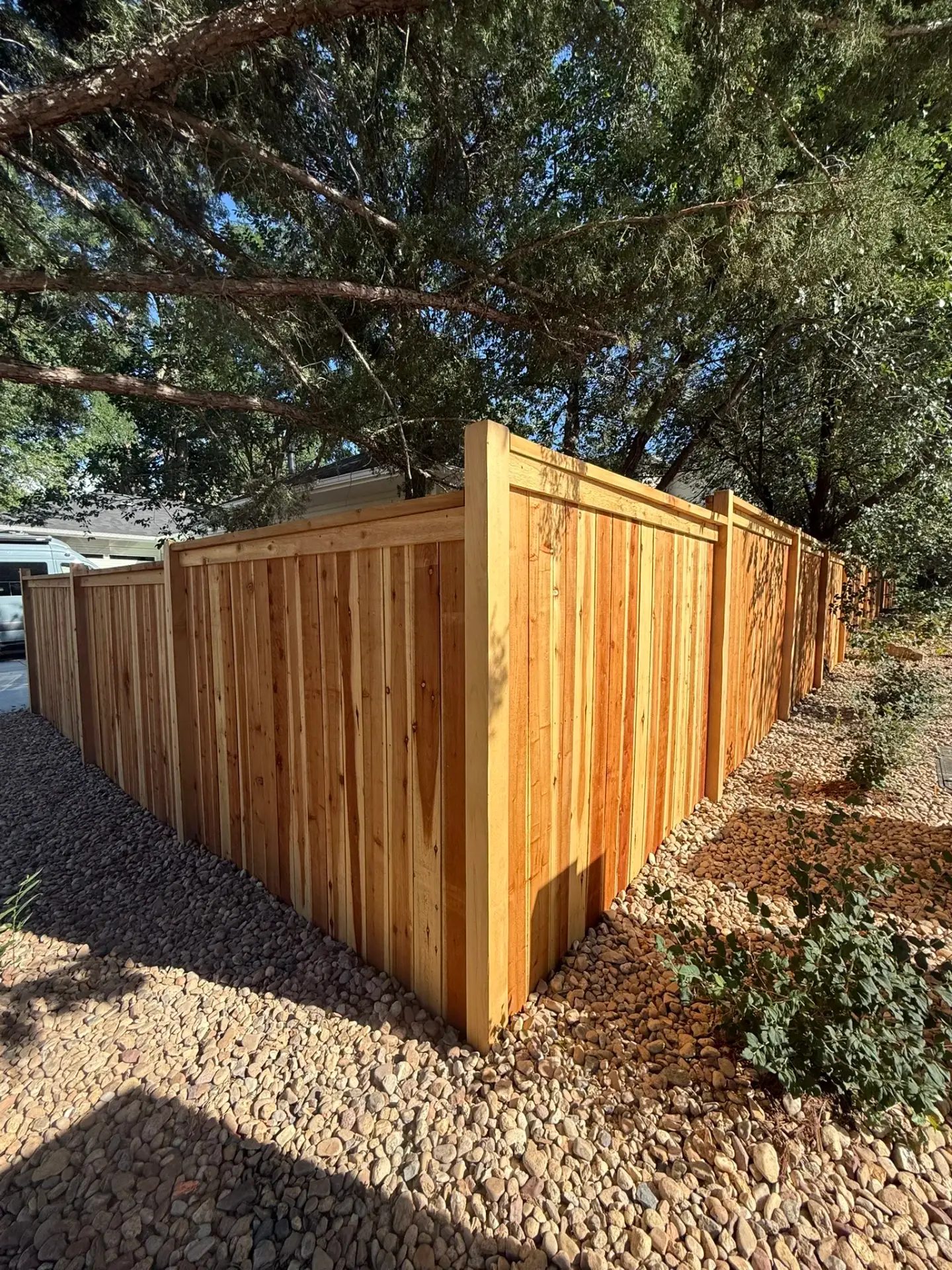
The shadowbox fence earns its "good neighbor" name for a reason. Boards alternate on the front and back rails — so both sides look equally clean, finished and polished. Your property gets privacy. Your neighbor gets a nice-looking fence. Everyone wins.
Beyond the aesthetics, shadowbox construction is structurally smart for Northern Colorado. The alternating gaps let wind pass through rather than push against a solid wall — reducing stress on posts and making the fence last longer in Fort Collins' Poudre Canyon wind corridor.
How a shadowbox fence actually works
The shadowbox pattern isn't just aesthetic — the alternating board placement creates a structurally smarter fence that handles wind, weather and time better than a solid wall.
Cross-section (top) and front elevation (bottom) of a standard shadowbox fence panel
Board placement
Air gap & wind
Privacy coverage
Standard board width
Both sides finished
Six reasons it's our most requested style
The shadowbox fence keeps winning because it genuinely solves more problems than any other cedar fence style.
Good neighbor
Both sides look identical and finished. Your neighbor gets a fence that looks just as nice from their yard — no negotiations, no hard feelings.
Real privacy
Board overlap blocks direct sight lines at all normal viewing angles. You get 85–95% visual privacy — indistinguishable from a solid fence at distance.
Wind resistant
Fort Collins sits at the mouth of Poudre Canyon. Shadowbox gaps reduce wind load on posts — meaning fewer blown-over fence panels every spring.
Natural airflow
Air circulates through the gaps — better for gardens, plants and grass growing alongside the fence line that need light and air movement.
Longer lasting
Less wind stress on posts means less movement and heaving over time. Shadowbox fences consistently outlast solid privacy fences in windy climates.
Design flexible
Add a lattice top, change board width, mix in horizontal sections or add a French Gothic top profile — shadowbox works with every custom element we offer.
Shadowbox vs other wood fence styles
Not every wood fence style works the same way. Here's an honest side-by-side of the most common cedar fence options.
| Feature | Shadowbox ★ | Solid Privacy | Picket | Horizontal Slat |
|---|---|---|---|---|
| Both sides finished | Yes — identical both sides |
No — one rough side |
Yes |
Varies |
| Privacy level | 85–95% at distance |
100% solid |
Low — open gaps |
High |
| Wind resistance | Excellent — gaps reduce load |
Poor — full wind load |
Good |
Moderate |
| Airflow through fence | Yes — natural gaps |
None |
Yes |
Minimal |
| HOA acceptance | Widely accepted |
Sometimes restricted |
Usually accepted |
Varies by HOA |
| Material usage | ~15% more lumber than privacy |
Least lumber |
Minimal lumber |
Similar to shadowbox |
| Customizable top | Lattice, dog-ear, gothic |
Yes |
Limited |
Limited |
Shadowbox uses ~15% more lumber than a solid privacy fence — the tradeoff for double-sided finish and wind performance.
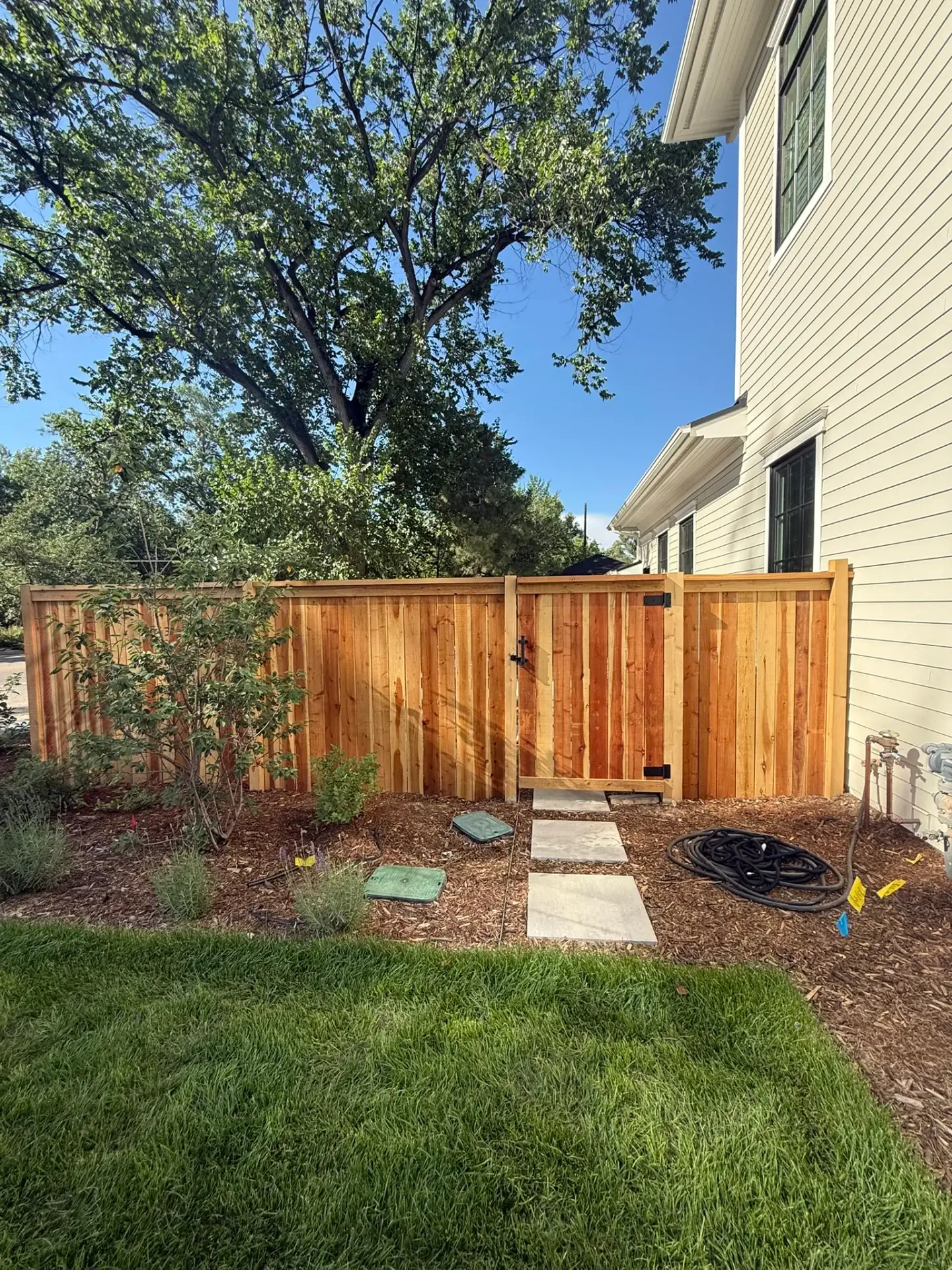
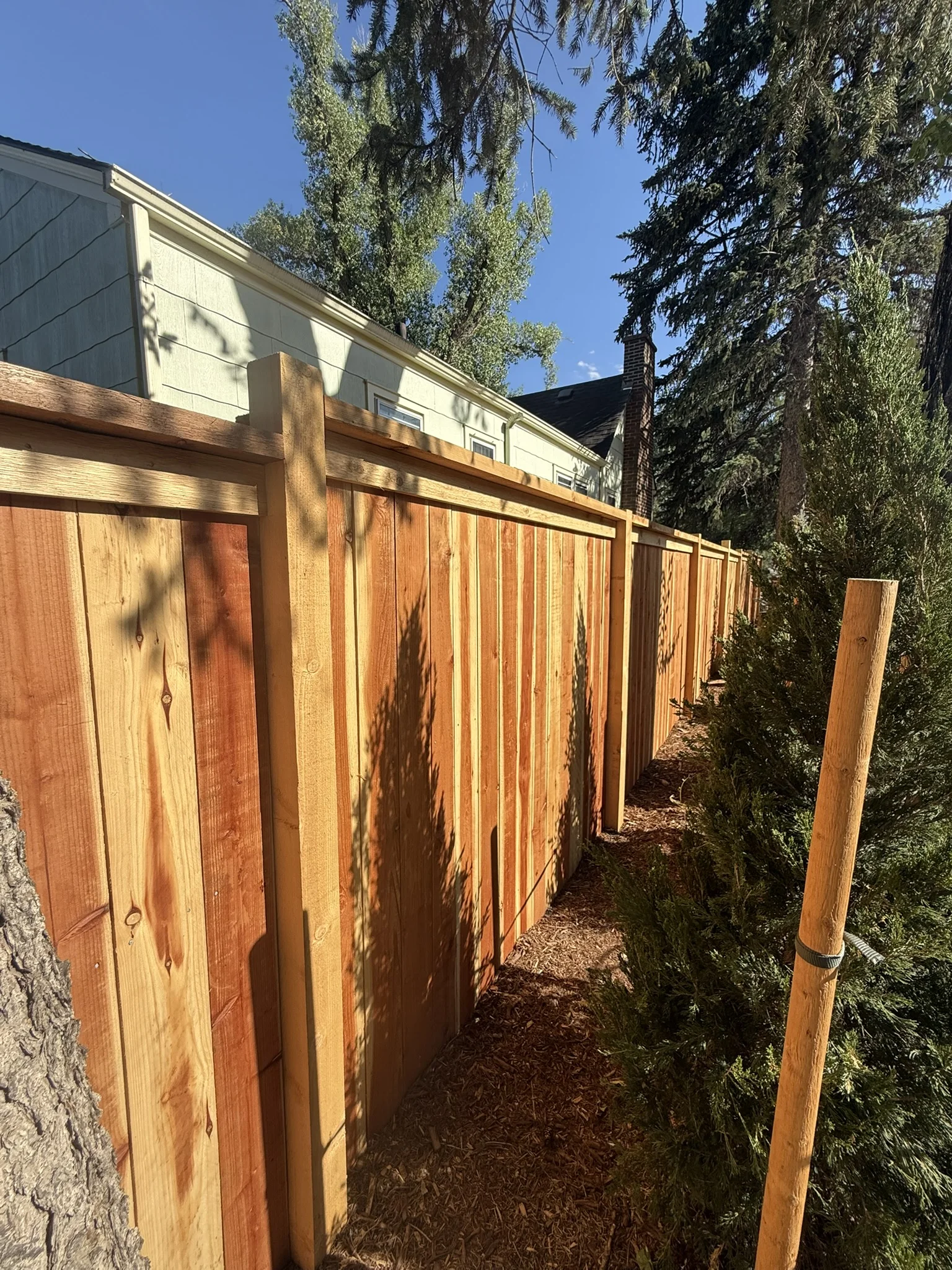
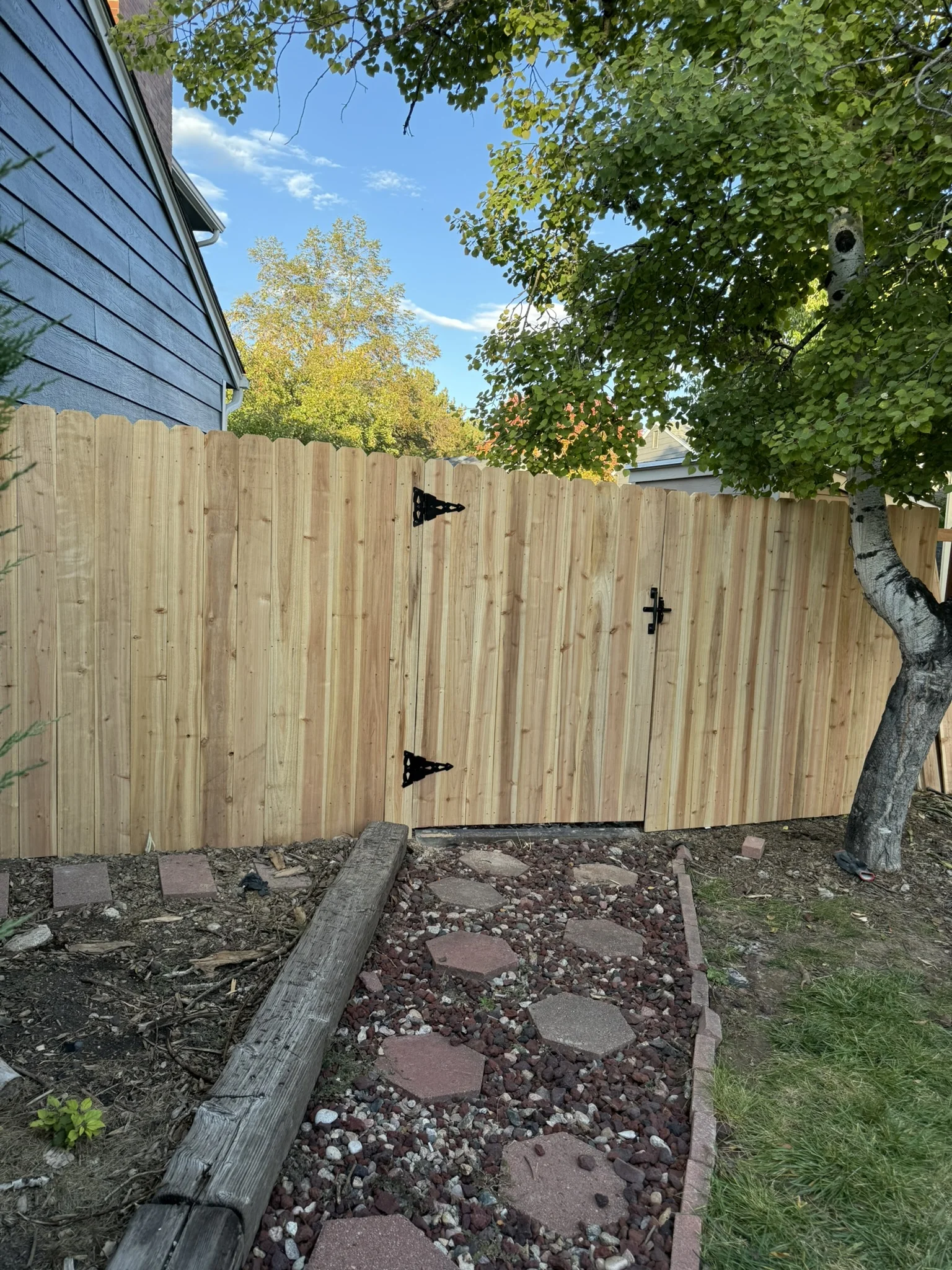
Built across Northern Colorado

Your shadowbox fence in four steps
-
Free quote
Call or fill out the form. We reply within 24 hours and schedule your estimate.
-
Site visit
We measure the run, check soil conditions and confirm board width and top style.
-
Material sourcing
Premium cedar milled to spec — straight, dry boards that won't warp after install.
-
Expert build
Posts set below frost line, rails leveled, boards alternated to spec — then we clean up completely.
Shadowbox FAQs
Everything you need to know about shadowbox fencing — privacy, wind, cost and how it compares to a solid privacy fence.
What exactly is a shadowbox fence?
A shadowbox fence — also called a board-on-board or good-neighbor fence — is a wood fence where boards alternate on the front and back rails. Front boards and back boards offset each other by roughly half a board width, so both sides of the fence look finished. Each board overlaps its neighbor slightly, blocking sight lines while leaving small gaps for airflow.
Does a shadowbox fence provide real privacy?
Yes. Because boards overlap, direct line-of-sight is blocked at any normal viewing angle. You get 85–95% visual privacy — at most distances this is indistinguishable from a solid privacy fence. The only view-through occurs when you look at a very low angle nearly parallel to the fence, which isn't a realistic sight line from most yards or neighboring properties.
Why is shadowbox better for windy areas like Fort Collins?
A solid privacy fence acts like a sail — it catches the full force of the wind and transfers it to the posts. In Fort Collins' wind corridor off Poudre Canyon, this causes solid fences to fail faster. A shadowbox fence lets wind pass through the gaps between boards, reducing wind load on posts by up to 30%. The result is less movement, less post heaving and a longer-lasting fence.
Is a shadowbox fence more expensive than a solid privacy fence?
Yes — slightly. Because each panel uses boards on both the front and back rails, a shadowbox fence uses approximately 15% more lumber than an equivalent solid privacy fence. The tradeoff is a double-sided finished look, better wind performance and a longer service life in Colorado's climate. For a free, accurate quote on your project, give us a call.
Can I add a lattice top to a shadowbox fence?
Absolutely — and it's one of our most popular combinations. A shadowbox lower section with a lattice top panel is a classic Fort Collins look that adds height, visual interest and a custom feel. We also combine shadowbox with dog-ear, French Gothic and flat top profiles. Tell us what you're thinking and we'll make it work.
What wood do you use for shadowbox fences?
We primarily use western red cedar — naturally rot and insect resistant, dimensionally stable in Colorado's climate and beautiful whether left natural or stained. We also build shadowbox fences in Douglas fir and pressure-treated pine depending on your budget and preference. We'll walk you through the options on your free estimate.
Does a shadowbox fence need maintenance?
Cedar is naturally durable and can be left untreated — it will weather to an attractive silver-gray over 1–2 years. To maintain the warm amber tone, a semi-transparent penetrating stain every 3–5 years is recommended. Avoiding standing water at post bases and keeping the fence clear of soil buildup extends its service life significantly.
Ready for the good-neighbor fence?
Free on-site estimate, 24-hour callback and 28+ years of shadowbox fences built right for Northern Colorado. Let's talk.